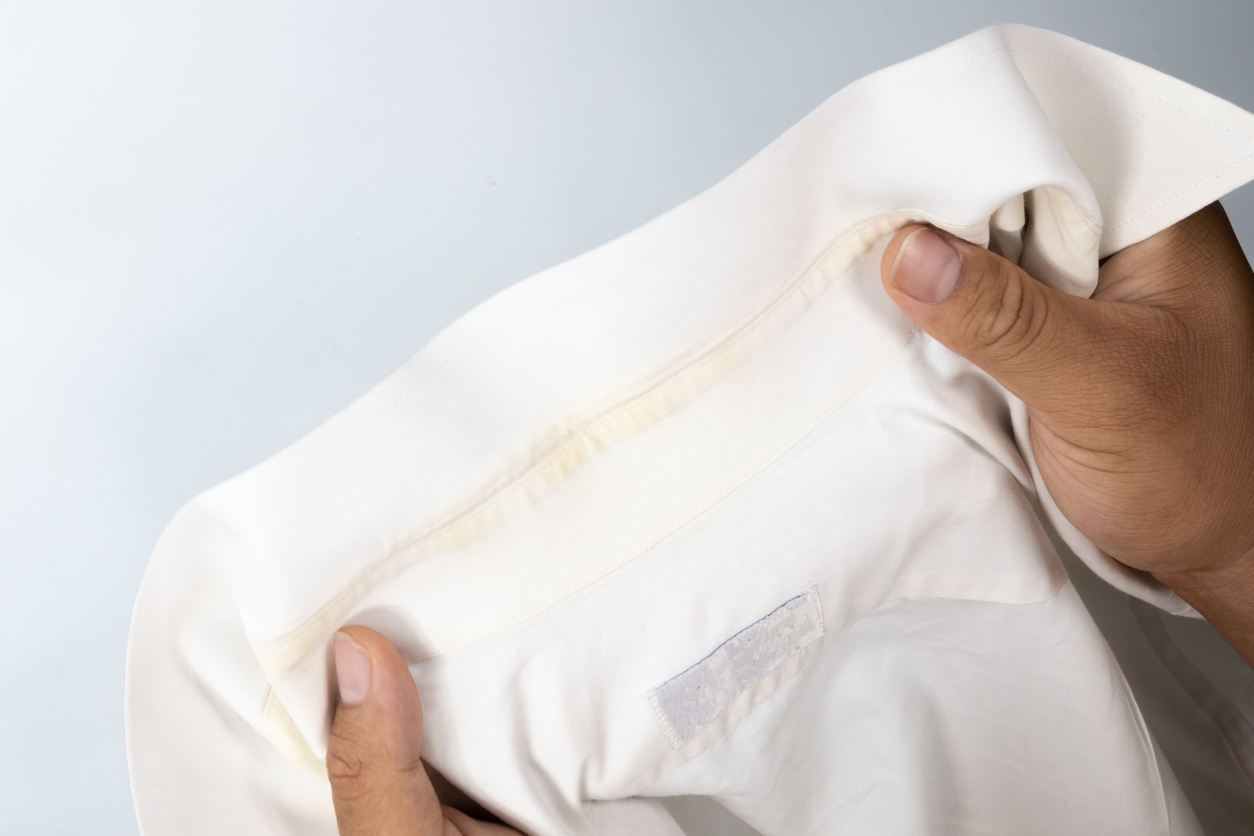
You wash your dress shirts regularly. Maybe you use warm water. Maybe with extra detergent. Maybe you even try bleach. And the yellow ring around the collar keeps coming back, darker each time, not lighter.
Here’s what you may have missed: collar yellowing is not a washing frequency problem. It’s a chemistry problem. The compounds that cause the yellowing don’t respond to standard laundry detergent. They require a completely different treatment approach, and every time you run that shirt through a hot cycle without pretreatment, you actually set the stain deeper into the fiber.
This guide breaks down exactly what causes collar yellowing, why your current approach makes it worse, and what specifically removes it, whether you treat it at home or decide it’s time for professional shirt laundry.
Most people assume collar yellowing is just old sweat. It’s more specific than that, and understanding the actual cause is what finally makes the solution click.
Your skin naturally produces oils called sebum all day long. The neck is especially active. Every time you wear a dress shirt, those oils transfer directly into the collar fabric and embed into the fibers, not sitting on the surface where detergent can grab them, but woven into the material itself. Cotton absorbs these oils faster than synthetic blends, which is why 100% cotton dress shirts tend to show collar yellowing sooner.
Most antiperspirants use aluminum salts as their active ingredient. That’s what blocks sweat. Those aluminum compounds transfer from the skin to fabric throughout the day. On their own, they’re manageable. But when aluminum compounds combine with the proteins in sweat and the oils from sebum, they form a new compound that is specifically resistant to water and standard laundry detergent.
Why the combination matters:
Either compound alone is somewhat manageable with regular washing. Together, they form a bond with the fabric that standard wash cycles don’t break. The yellow color you see is the result of these compounds oxidizing over repeated wash and dry cycles. That’s why heat actually makes collar staining worse over time, not better.
Not all shirts stain at the same rate. Looser weaves pull in more oil per wear. Polyester blends resist absorption better in the short term, but once aluminum compounds do embed in synthetic fibers, they’re actually harder to lift out than from natural cotton.
If you notice your white dress shirts yellowing faster than your colored shirts, the dye in colored fabrics can mask early stage staining, not eliminate it. The chemistry is the same underneath.
Standard laundry detergents are built for water soluble soils: food stains, surface dirt, and light sweat. The oil aluminum compound in collar staining is not water soluble. It bonds to fabric at a molecular level that a regular wash cycle won’t penetrate, no matter how hot the water or how much detergent you use.
The observation you’ve probably made: the collar looks lighter right after washing but returns darker after drying. That’s not the stain “coming back”. The water temporarily lightens the appearance while the dryer heat sets the compound further. Each cycle makes the stain slightly more permanent.
If you iron your dress shirts regularly, pretreating the collar before washing (not just washing, not just ironing) is the step that breaks the cycle.
The most important rule, before anything else: Pretreat the collar while it’s dry, not wet. Apply the treatment directly to the dry collar before putting the shirt into the machine. Treatments applied to a wet collar get diluted before they can penetrate the fiber. This is the single most commonly overlooked step, and it’s the difference between a treatment that works and one that doesn’t.
1. Lay the dry shirt flat. Do not wet the collar first.
2. Choose your treatment (options below) and apply directly to the collar.
3. Gently scrub with a soft brush or old toothbrush, working it into the fabric.
4. Let it sit. Minimum 20 minutes. Up to 30 minutes for older staining.
5. Wash in COLD water. Hot water at this stage will set whatever the treatment hasn’t fully lifted.
6. Check the collar before the dryer. If the stain is still visible, repeat the treatment before applying any heat.
What Not to Do
Treatment works, but prevention works better. A few habits that actually reduce the rate at which collars stain:
Home pretreatment is effective for fresh staining or stains that haven’t been through too many heat cycles. Once a collar stain has been washed and dried repeatedly, the chemistry gets harder to reverse. That’s when professional shirt laundering earns its value.
| Home Treatment | Professional Shirt Laundering |
|---|---|
| Retail enzyme pretreaters with standard concentrations | Commercial grade pretreatment agents with higher enzyme concentration and collar specific formulations not available in retail |
| Manual scrubbing with dish soap or paste | Individual collar pretreatment by a technician before the shirt enters the cleaning cycle |
| Home iron presses directly onto the collar, risking heat setting on any remaining stain | Steam finishing equipment that doesn’t heat set collar staining because the collar is treated first |
| Effective on fresh to moderate staining (fewer than 10 heat cycles) | Effective on set staining that has been through 10+ wash/dry cycles with heat |
Not all shirt laundry services pay the same attention to collar pretreatment. When you take in shirts, ask specifically whether they pretreat collars and cuffs before laundering, not just wash them. A professional facility should be able to confirm the pretreatment step and describe what products they use. If the answer is vague, that’s useful information.
At D.O. Summers Cleaners, every shirt goes through a hands-on 10-point inspection before laundering, collar and cuffs included. We use commercial grade enzyme pretreatment agents applied directly to the collar, filtered water, and eco-friendly detergents to lift what regular washing leaves behind.
Our precision finishing equipment presses each shirt without heat setting the way a home iron does. From the collar to the cuffs, you’ll see the difference!
If you’re in South Euclid or anywhere in Northeast Ohio, bring us your shirts, especially those you already tried to treat at home.
Contact Guide:


