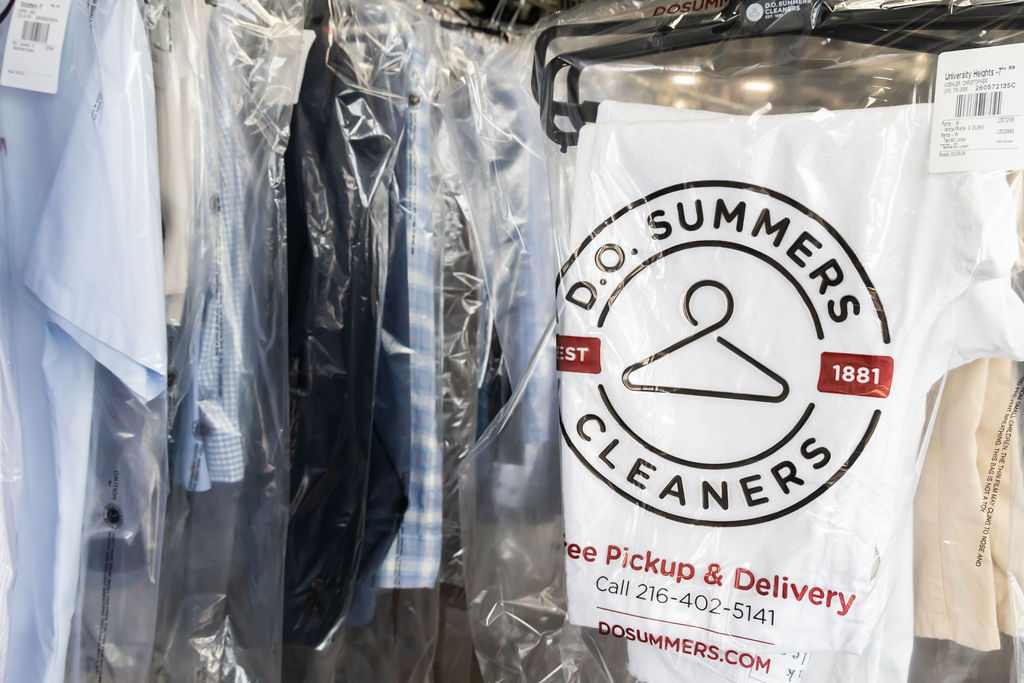
If you're already leaning toward an eco-friendly dry cleaner, this guide gives you the specifics behind that choice, such as what processes are actually involved, how they differ from conventional dry cleaning, and what to expect for your clothes.
If you still have doubts lingering, this gives you what you need to decide. Either way, it starts with the same place: what conventional dry cleaning actually uses and why the industry started looking for alternatives.
Traditional dry cleaning has relied on one chemical for most of the past century: perchloroethylene, or "PERC". It's an effective solvent. It lifts body oils, food residue, and environmental grime from fabric without using water, which makes it useful for delicate items that can't go into a washing machine.
The problem is what PERC does outside the cleaning machine. The EPA classifies it as a probable human carcinogen. It's a volatile organic compound (VOC), meaning it can off-gas from freshly dry cleaned clothes after they come home. And its disposal creates documented groundwater contamination risks when not handled carefully.
PERC became the industry default in the mid-20th century because it worked fast, effectively, and was relatively easy to use at scale. Equipment was built around it, supplier chains standardized it, and for decades, the health concerns weren't fully understood. Now they are, and the industry is catching up.
"Eco-friendly dry cleaning" isn't one single method. It's an umbrella term for several alternatives to PERC.
Here are the three most common:
Petroleum-derived, but significantly less toxic than PERC. No carcinogen classification, no heavy VOC concerns. This is the most widely adopted PERC alternative among traditional dry cleaners making the switch.
A silicone-based fluid that's odorless and pH-neutral. When it breaks down, it biodegrades into sand, water, and carbon dioxide. It's particularly gentle on fine or delicate fabrics, which is why cleaners using it often market it specifically to silk and cashmere customers.
Water-based, but not your home washing machine. Professional wet cleaning uses specialized equipment, controlled temperatures, and commercial-grade detergents to safely handle many “dry clean only” garments. It carries the lowest environmental footprint of any option.
One practical note: when a cleaner advertises eco-friendly dry cleaning, they're usually using one of the first two methods. It's worth asking specifically which one, they're meaningfully different in how they work and what they're best suited for.
Ask directly: “What solvent do you use?” Any reputable cleaner will tell you. If they say GreenEarth®, that's a specific branded certification. If they say hydrocarbon or DF-2000, that's also a clear answer.
This is one of the most common questions people have, and the short answer is yes, for most garments, eco-friendly alternatives clean just as well as PERC.
For everyday dry cleaning items, wool suits, dress shirts, structured blazers, and trousers, hydrocarbon and GreenEarth® solvents handle the most common soils (body oils, food stains, environmental dirt) without damaging fibers. Cleaning results are comparable to PERC.
For delicates such as silk and cashmere, GreenEarth® actually has a fabric-feel advantage. Because it's pH-neutral and chemically gentle, many customers report clothes coming back noticeably softer than from PERC-based cleaning, which can cause slight stiffening or dulling over time with repeated use.
What doesn't change: the process itself. Inspection, stain pretreatment, the cleaning cycle, and finishing are all the same regardless of solvent. The cleaner's skill in pretreating stains matters as much as which solvent they use.
One honest limitation: no solvent removes every stain on every fabric. Protein-based stains (blood, sweat, some food residue) often respond better to professional wet cleaning than to solvent-based approaches. A good cleaner will tell you up front if wet cleaning is the better option for a specific item.
"Dry clean only" is a care recommendation, not a strict legal requirement. That label reflects what the manufacturer tested, usually PERC, but it doesn't mean eco-friendly solvents or professional wet cleaning will damage the garment. In many cases, GreenEarth®-certified cleaners routinely and safely handle items labeled dry clean only.
The benefits of eco-friendly dry cleaning are real, but so is some of the marketing overreach. Here's what holds up:
The nuances worth knowing:
Eco-friendly dry cleaning is a genuine step forward from conventional PERC-based cleaning. Not perfectly sustainable, but substantially better from a health and environmental standpoint.
It doesn't mean zero environmental impact. It doesn't mean the process is water-free (wet cleaning obviously uses water). And it doesn't mean all eco-friendly cleaners are equivalent, since method, equipment quality, and staff training all vary. The label is a useful signal, but asking follow-up questions is still a good call.
Now that you know what separates eco-friendly dry cleaning from conventional PERC-based cleaning, the next question is simple: who actually does it right in your area? Not every cleaner that uses the term has the process, the equipment, or the track record to back it up.
At D.O. Summers Cleaners, we made the switch to GreenEarth® Cleaning over 30 years ago – long before it became a marketing trend. Every garment that comes through our doors is evaluated individually and cleaned using a process that’s gentle on fabric, free of PERC, and recognized as one of the most environmentally responsible dry cleaning methods available.
We’ve been serving Cleveland and Northeast Ohio since 1881, and consistent, careful garment care is what we’re built on.
If you’re ready to work with a cleaner that’s been doing this the right way for decades, we’d love to take care of your clothes.
Schedule your dry cleaning Pickup and Delivery Service today.
Contact Guide:
📍 Address: 14409 Cedar Rd., South Euclid, Ohio
📞 Phone: +1 216-284-6494
📧 Email: info@dosummers.com


